Convert OPUS to MP3
without the upload.
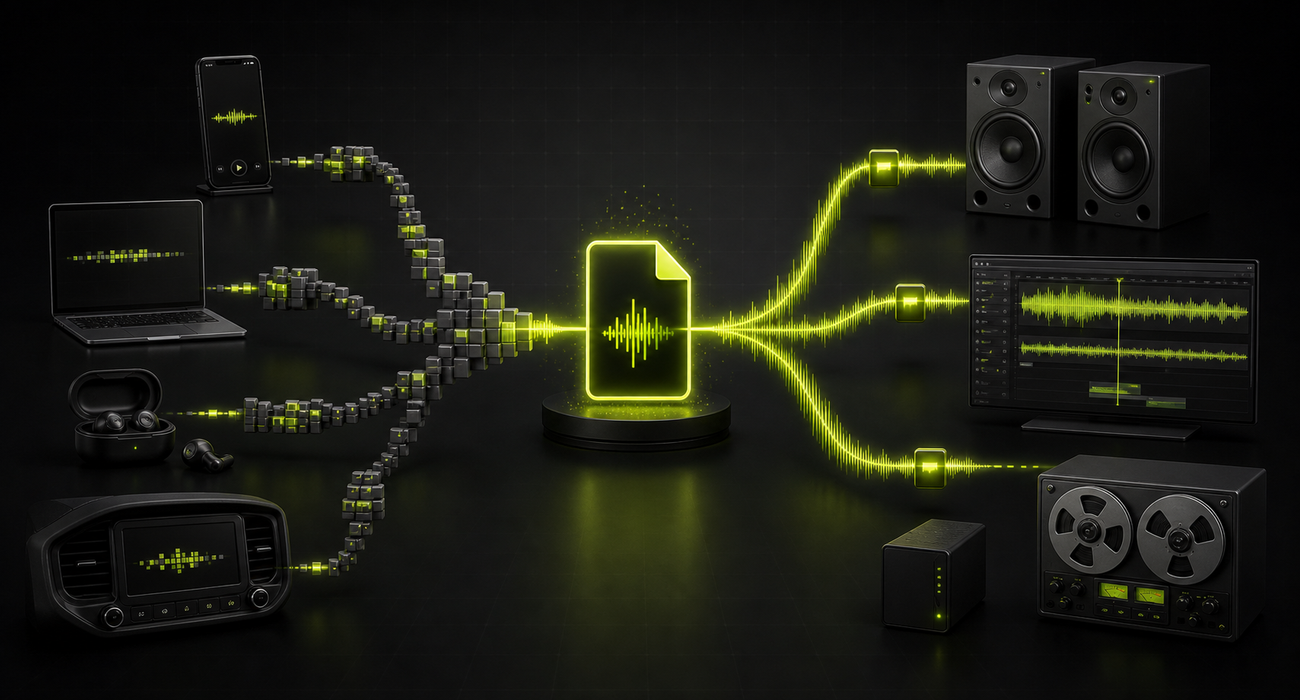
A private OPUS to MP3 converter for .opus, .ogg, and .webm audio. Convert files directly in your browser with no uploads, no server queues, and no sign-up.
Drag & drop OPUS, OGG, or WEBM files
or click to browse. Files are processed entirely in your browser. No uploads, zero server tracking.
Output Settings
Transparency Console
Single-thread (Fallback)Built for fast, private OPUS to MP3 conversion when you need MP3 compatibility across devices, editors, and messaging apps.
How OPUS to MP3 Conversion Works (Without Servers)
Unlike typical online tools, this OPUS to MP3 converter runs the conversion engine inside your browser. That means your audio stays on your device instead of going to a third-party server.
Engine Loads
When you first use the OPUS to MP3 converter, your browser downloads a small WebAssembly version of FFmpeg and caches it locally.
Local Processing
Your device's CPU handles the heavy lifting. The OPUS file is decoded and re-encoded to MP3 entirely within your browser's memory sandbox for fast OPUS to MP3 conversion.
Instant Save
Because the file never left your device, downloading the finished MP3 is instantaneous. No waiting for server queues or network transfers.
Don't trust us. Test it yourself.
Anyone can claim "zero server uploads." We want you to verify the part that matters: your file never leaves your device. On first use, your browser may load the WebAssembly engine once. After that, turn off your Wi-Fi and convert opus to mp3 locally.
$> uploads: none
$> engine: in-browser WebAssembly
$> offline: after first load
Benchmark Lab
Test the WebAssembly engine performance directly on your device. Zero server uploads.
Why people convert OPUS files to MP3
Most people make the switch when they need better compatibility for editing, sharing, archiving, or playback on older devices.
WhatsApp & Telegram
Voice notes are often saved as OPUS. Convert them to MP3 to share outside messaging apps or play on standard media players.
Video Editing
Premiere Pro, DaVinci Resolve, and Final Cut often struggle with raw OPUS files. MP3 ensures universal timeline compatibility.
Legacy Devices
Older car stereos, dedicated MP3 players, and smart TVs require standard MP3 files and cannot decode modern OPUS streams.
Voice Archives
Standardize your personal audio archives into a universally supported format that will remain playable decades from now.
When NOT to convert
If you are building a modern web app, streaming audio, or storing files where you control the playback environment, keep them as OPUS. It offers better quality at lower bitrates than MP3.
Bitrate Guide
Voice Notes & Speech
Perfect for WhatsApp voice memos, podcasts, and audiobooks. Keeps file sizes tiny.
Standard Music
The historical standard for MP3s. Good balance of acceptable quality and small size.
High Quality (Recommended)
Transparent quality for most listeners. The best default choice for general audio.
Maximum Quality
The highest MP3 bitrate. Use only if preserving maximum fidelity for editing or archiving.
Why is the MP3 bigger?
When you convert OPUS to MP3, the new file is often larger than the original. That is expected because MP3 needs a higher bitrate to preserve similar perceived quality.
OPUS is a modern marvel. It was standardized in 2012 and uses advanced psychoacoustic models and prediction algorithms. It can achieve transparent voice quality at just 32 kbps.
MP3 is from 1993. It requires much higher bitrates (typically 128 kbps to 192 kbps) to achieve similar perceived quality. When we convert OPUS to MP3, we must use a higher bitrate to avoid introducing new compression artifacts.
In practice, converting an OPUS file to MP3 means trading some codec efficiency for wider playback and editing support.
The Golden Rule of Transcoding
Converting from a highly efficient format (OPUS) to an older, less efficient format (MP3) will always result in a larger file if you want to maintain the same audio quality.
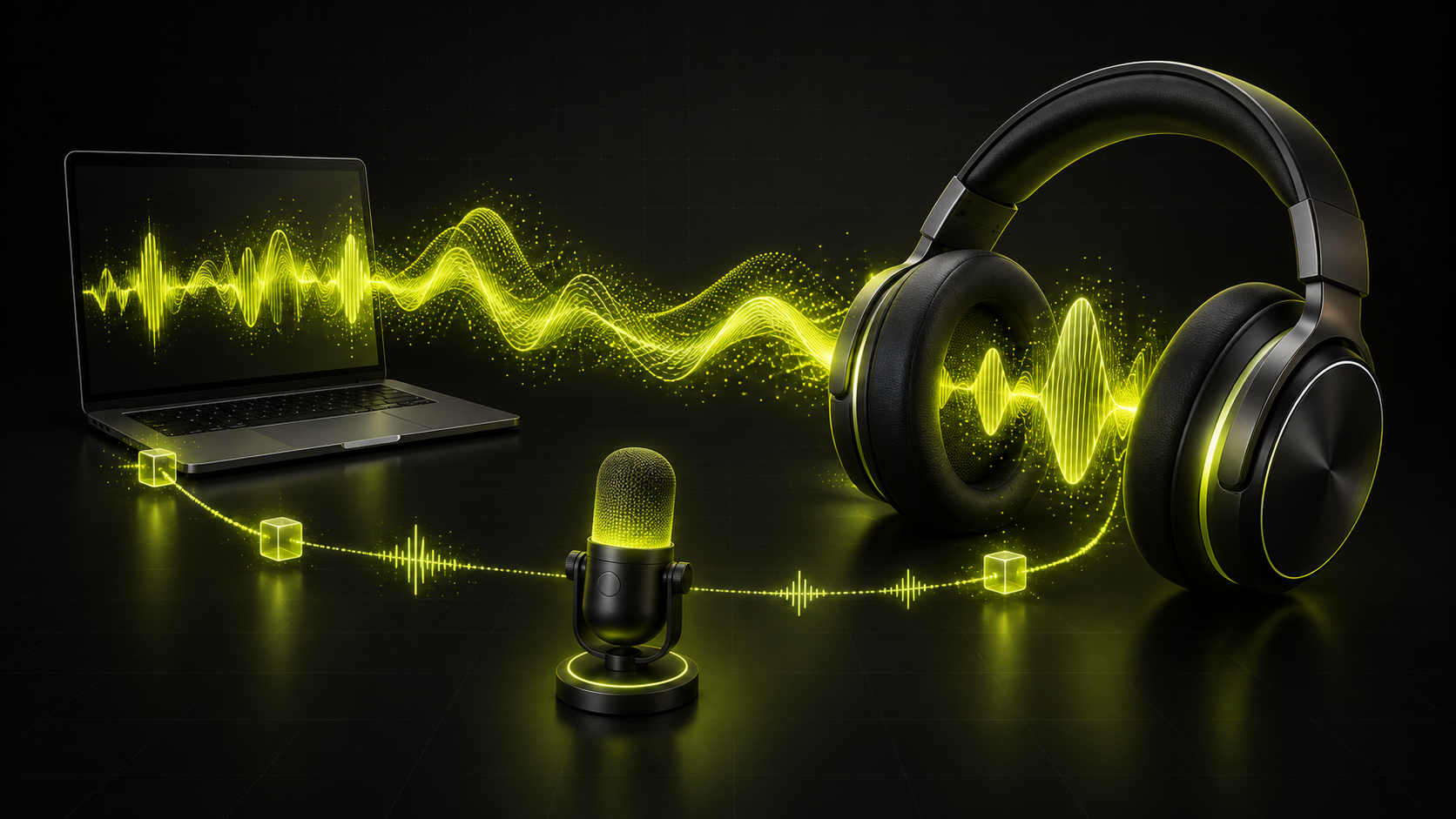
OPUS is a codec, not just a file extension
You might be surprised to learn that many files ending in .ogg or .webm are actually OPUS files inside. OPUS is the audio compression method (the codec), but it needs a "container" to hold it. Our OPUS to MP3 converter accepts all of these automatically.
The standard extension. Used when the file only contains OPUS audio and nothing else.
The OGG container. Very common for OPUS. WhatsApp voice notes use this format.
The WebM container. Often used by web browsers when recording audio from a microphone.
Frequently Asked Questions
Next-Step Audio Tools
More browser-first utilities for trimming, cleanup, and OPUS file inspection.
Audio Trimmer
Coming soonTrim the start, end, or awkward middle sections before exporting or sharing audio.
Voice Note Cleaner
Coming soonClean up spoken audio by trimming dead air and leveling volume before you export.
Opus Metadata Viewer
Coming soonInspect codec, container, duration, bitrate, sample rate, and embedded tags inside OPUS files.
Changelog
v2.0.0 - Browser-First Rebuild
2026
Redesigned the product and moved conversion from servers to the browser for a faster, safer, and fully local experience.
v1.5.0 - Localization Update
2022
Expanded the product to support 9 languages, making the OPUS to MP3 converter more accessible to users worldwide.
v1.0.0 - Original Launch
2019
Released the first version of the OPUS to MP3 converter as a simple online tool with server-side conversion.