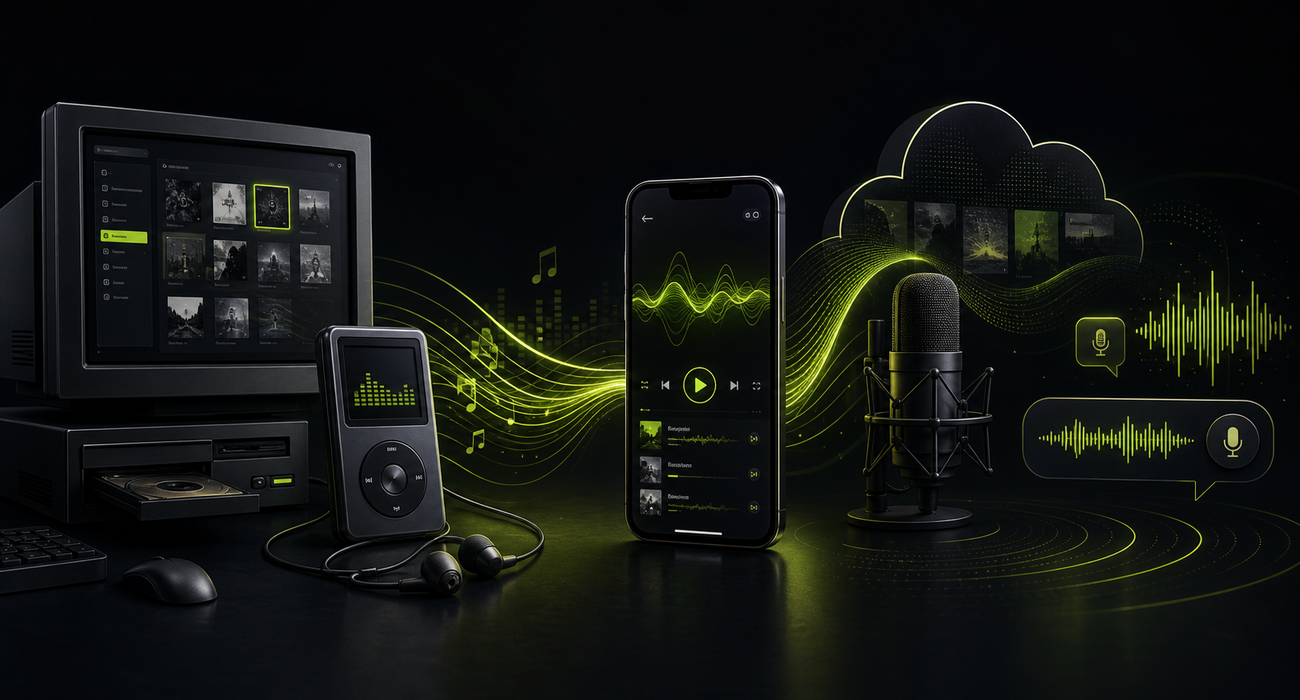
Why MP3 changed everything
Before digital audio became ordinary, music was tied to physical media and specific playback devices. CDs sounded clean, but they were not built for copying a single song to a laptop, sending a track to a friend, or carrying a personal library in a pocket.
MP3 changed that relationship. It compressed audio enough to make files small, portable, and easy to store on consumer hardware of the time. That did not just reduce file size. It turned music into something people could organize, rename, copy, back up, and move around like any other digital file.
- A full album could fit on a hard drive without feeling extravagant
- Single tracks became easier to share and manage than whole discs
- Portable players made a personal music library feel normal
The big idea
MP3 did not win because it was perfect. It won because it made digital audio practical at the exact moment people needed practicality.
Downloads made audio personal
The download era trained people to think of audio as a collection. You had folders, filenames, playlists, tags, album art, duplicate tracks, and sometimes a little chaos. Managing music became part of listening to music.
That era was messy, but it was empowering. People could rip CDs, buy tracks, download podcasts, build mixtapes, and carry files between computers and players. The library belonged to the listener, even when the folder structure was imperfect.
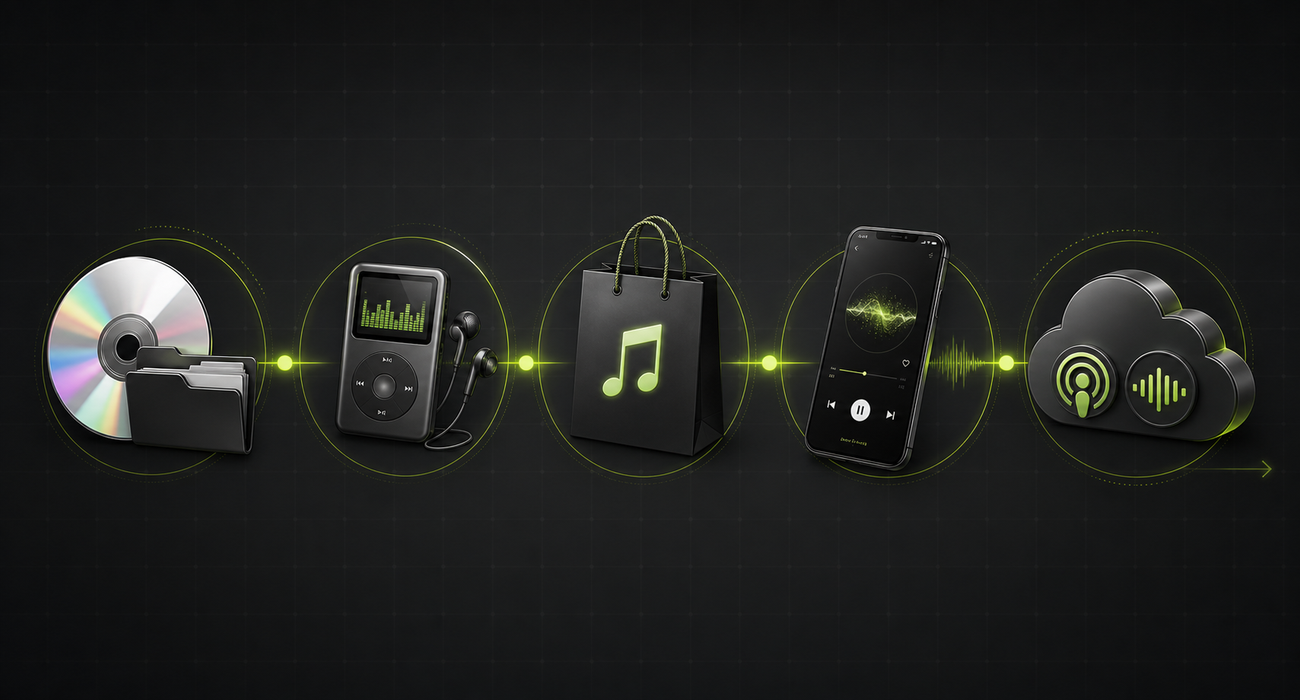
Stores made digital music normal
The next shift was not only technical. It was cultural. Online music stores helped convince mainstream listeners that buying a file could feel as normal as buying a disc. Apple launched the iTunes Music Store in 2003, and the idea of paying for individual digital tracks became familiar to millions of people.
This changed expectations. Listeners wanted instant access, searchable catalogs, quick previews, and easy syncing. The file still mattered, but the experience around the file started to matter just as much.
- Digital music became easier to buy one track at a time
- Metadata, artwork, and library views became part of the listening experience
- Syncing across a computer and portable player became a mainstream habit
Streaming shifted ownership to access
Streaming changed the center of digital audio again. Instead of asking whether a song was stored on your device, listeners began asking whether it was available in the app. The library moved from the hard drive to the service.
That shift had tradeoffs. Streaming removed a lot of file management and gave people enormous catalogs, recommendations, shared playlists, and device handoff. It also made access depend on subscriptions, licensing, connectivity, and platform rules.
| Era | What people managed | Main advantage | Main tradeoff |
|---|---|---|---|
| MP3 downloads | Files and folders | Ownership and portability | Manual organization |
| Online stores | Purchased libraries | Convenient legal access | Device and account lock-in |
| Streaming | Playlists and subscriptions | Huge catalogs on demand | Access depends on the service |
YouTube, podcasts, and voice notes expanded audio
The story is not just music. YouTube made audio consumption blend with video, search, recommendations, and creator culture. Many people now use video platforms as music players, lecture archives, podcast apps, ambient sound sources, and discovery engines.
Podcasts pushed audio toward subscriptions and episodic listening. Voice notes pushed it in the opposite direction: tiny personal recordings sent inside chat apps. Together, they made audio feel less like a music format and more like a general communication layer.
- YouTube made audio searchable and creator-driven, even when the screen was secondary
- Podcasts made long-form spoken audio part of daily routines
- Voice notes made short personal audio feel as casual as texting
Cloud libraries made audio device-independent
The modern library is often invisible. A song, podcast episode, meeting recording, or voice memo may appear on a phone, laptop, smart speaker, car dashboard, and browser without the user manually moving a file. That convenience is now the expectation.
Cloud libraries also changed what people worry about. Instead of asking where the file is, they ask whether it synced, whether the app can play it, whether the account still has access, and whether the audio can be exported when needed.
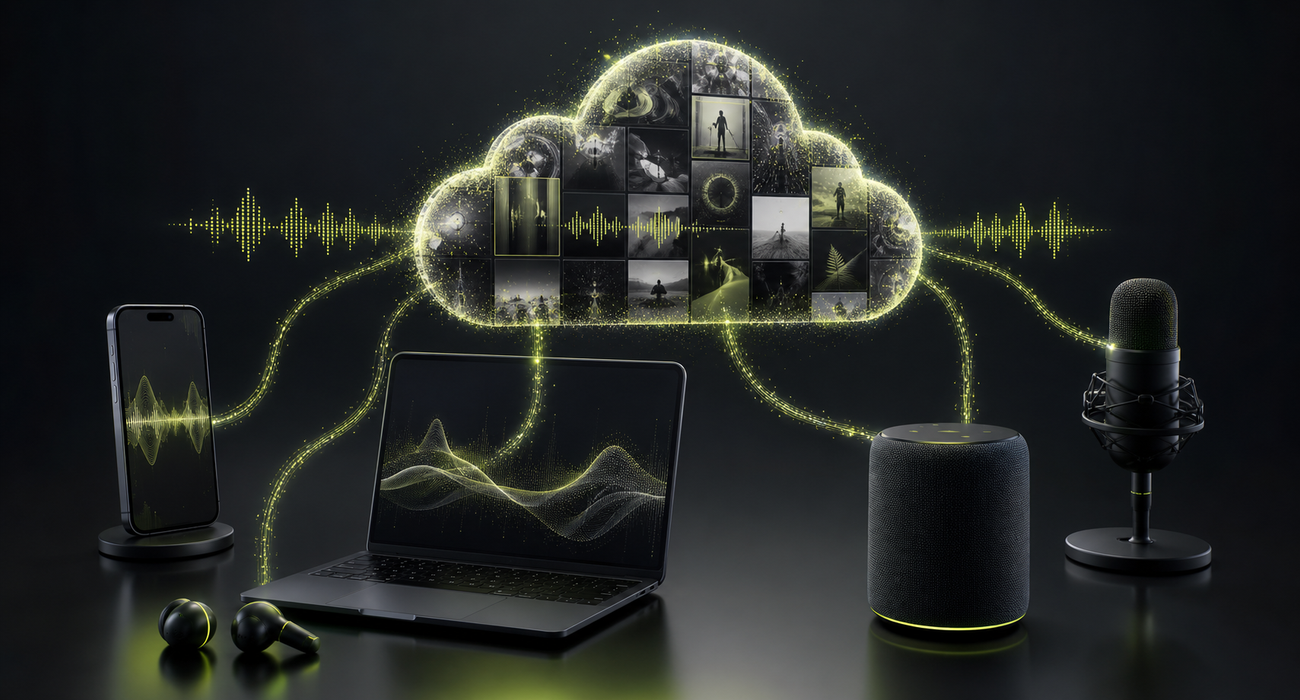
What the evolution means now
Digital audio has not moved in a straight line from worse to better. Each stage solved one problem and created another. MP3 solved portability. Stores solved mainstream purchasing. Streaming solved catalog access. Podcasts and voice notes solved new communication patterns. Cloud libraries solved device switching.
That is why older formats still matter in a streaming world. People may listen inside apps most of the day, but they still export, upload, archive, edit, share, and convert audio. The future of audio is not one format replacing every other format. It is many layers working together.
Useful way to think about it
Streaming is the dominant experience, but files are still the fallback when people need control, compatibility, archiving, or editing.
Beginner FAQ
Did streaming replace MP3 completely?
No. Streaming replaced file management for many everyday listening habits, but MP3 is still common for exports, downloads, archives, uploads, car stereos, simple web audio, and compatibility workflows.
Why did MP3 become popular before streaming?
MP3 made audio small enough to store, copy, and carry on the hardware and internet connections people actually had. It was practical before always-on streaming became practical.
How did podcasts change digital audio?
Podcasts normalized subscribed spoken audio, automatic downloads, long listening sessions, and audio as a daily habit beyond music.
Why do voice notes belong in this history?
Voice notes show that digital audio is now a communication format too. A short recording in a chat app is part of the same larger shift toward audio that moves easily between devices and services.