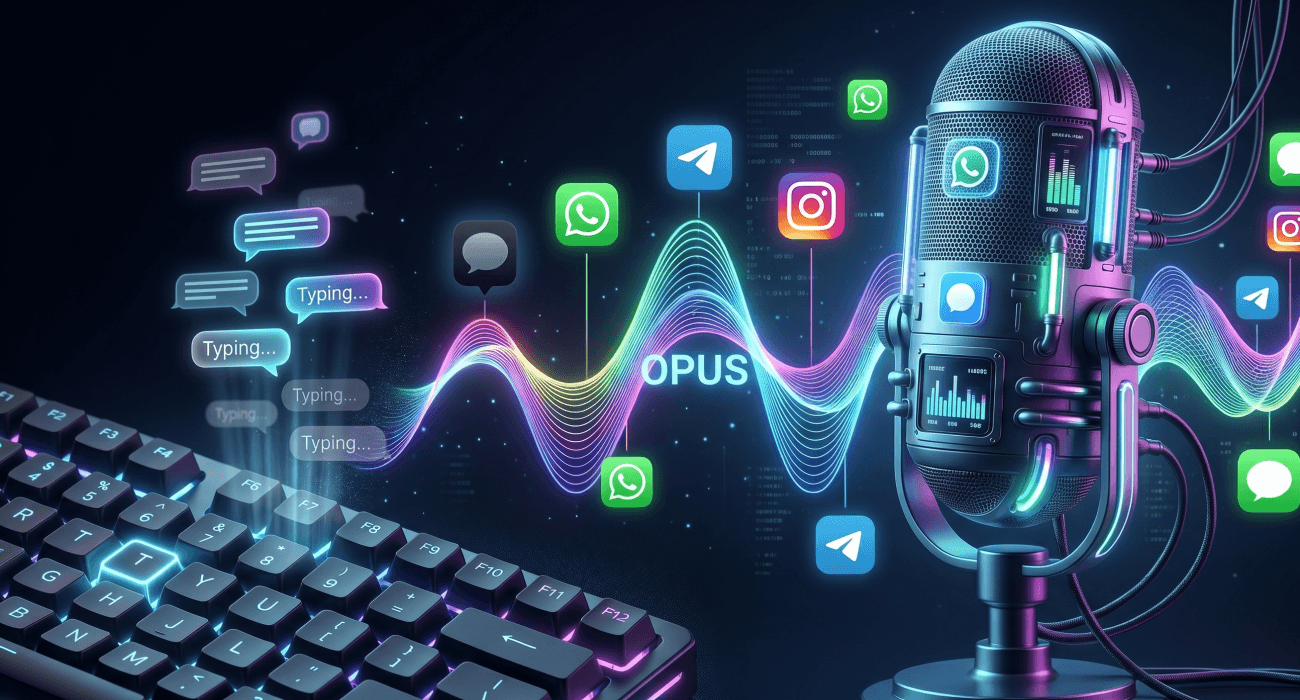
How voice notes went mainstream
Voice messaging used to feel like a niche feature. Early mobile phones had voicemail, walkie-talkie apps, and occasional audio attachments, but they were not part of normal daily chat. What changed is that messaging apps made recording instant, visible, and socially acceptable.
WhatsApp, Telegram, iMessage, Instagram, and similar apps turned voice messages into a built-in button right inside the text box. That placement matters. It changed audio from a special action into a normal reply format.
The key shift
People did not suddenly discover that speech is fast. Apps simply removed enough friction that talking became the easier default in many situations.
Apps made talking feel almost effortless
The best voice-note interfaces are designed around momentum. You hold, speak, release, and send. There is no subject line, no file picker, no naming step, and no visible sense that you are creating a formal audio file.
Features like waveform previews, lock-to-record gestures, playback speed, auto-download, and background listening made the format easier to use in real life. The result is that a voice note now feels more like an extension of chat than a media attachment.
- One-tap recording reduced effort compared with typing on a phone
- Playback controls made long messages less annoying to consume
- Message history made voice notes easier to revisit than phone calls
- Asynchronous delivery meant nobody had to be available at the same time
Speaking often feels easier than typing
Typing requires micro-decisions. You choose words, punctuation, tone, and structure while also wrestling with a small keyboard. Speaking lets many people offload that effort. They can think out loud and send the result with minimal editing.
That is especially true when someone is walking, multitasking, emotional, or trying to explain something nuanced. A 45-second voice note can replace a long back-and-forth text thread that would have taken more time and mental energy to write.
Convenience beats neatness
People often know that a typed message would be cleaner. They still send audio because ease usually wins over polish in everyday chat.
Tone and emotion travel better in audio
Text is efficient, but it strips away a lot of social context. Voice carries mood, hesitation, humor, stress, warmth, and emphasis. That makes some messages easier to interpret and less likely to be read in the wrong tone.
This matters in close relationships, but it also matters in work chat. A short audio message can clarify intent quickly, especially when someone wants to explain context without sounding blunt or robotic.
- Pauses can signal uncertainty or care
- Energy and pacing can make a message feel friendlier
- Complex explanations can sound more natural when spoken
Asynchronous audio fits modern life
Voice notes sit in an interesting middle ground between texting and calling. Calls demand both people at the same moment. Texts are flexible, but often slow. Voice messages let someone speak now and let the other person listen later.
That timing model fits how people actually communicate today. Friends reply between errands, coworkers respond between meetings, and families trade updates across time zones. Audio became popular in part because it respects fragmented schedules.
Why some people still hate them
Voice notes have obvious downsides. They are harder to skim, harder to quote, and harder to search than text. They also assume the listener can play audio at that moment, which is not always true in public or professional settings.
That is why the format remains polarizing. Fans experience freedom and speed. Critics experience friction and delay. Both reactions make sense because the same feature that helps the sender often creates work for the receiver.
- Audio is slower to scan than text
- Not everyone can listen immediately
- Long voice notes can feel inconsiderate if a short text would do
- Accessibility and transcription still vary widely across apps
What happens next
Voice messages are unlikely to disappear. If anything, transcription, translation, and AI summaries will make them easier to send and easier to consume. That could reduce the main complaint people have today, which is that audio takes too long to process.
The more interesting question is not whether voice notes survive, but where they settle. They may never replace text, but they have already become a permanent third mode between typing and calling.
Beginner FAQ
Why do people send voice notes instead of just calling?
Voice notes keep the speed and personality of speech without requiring both people to be free at the same time. That makes them less intrusive than a call.
Why are voice messages so common on WhatsApp and Telegram?
Those apps made recording extremely easy and normalized the behavior early, especially on mobile where typing can feel slow and awkward.
Are voice messages becoming common at work too?
Yes, especially in remote teams and chat-first workplaces. People often use short audio to explain context quickly, though text still works better for search and documentation.
Why do some people dislike receiving them?
Because audio is harder to skim, harder to search, and not always convenient to listen to immediately. What feels easy for the sender can feel slower for the listener.